0%

Stable Video(3D) Diffusion

Tutorial

SVD 使用 EDM 的思想,将离散噪声改进成连续噪声。对于原来的 DDPM,输入的是 \(t\) 这个参数;而 EDM 论文指出,\(t\) 实际上表示的是噪声强度 \(\sigma_t\),应该直接把 \(\sigma_t\) 输入进模型。

所以 EDM 的观点是:与其用离散的 \(t\) 训练一个只认识离散噪声强度的去噪模型,不如训练一个认识连续噪声强度 \(\sigma\) 的模型。这样在采样 \(n\) 步时,不再是选择离散的去噪时刻 [timestep[n], timestep[n-1], ..., 0],而是可以选择连续的噪声强度 [sigma[n], sigma[n-1], ..., 0]

Reference:yifanzhou 的 SVD 解析

Code

time_embed

1
2
3
4
5
6
time_embed_dim = model_channels * 4  # 1280
self.time_embed = nn.Sequential(
linear(model_channels, time_embed_dim),
nn.SiLU(),
linear(time_embed_dim, time_embed_dim),
)

label_emb

1
2
3
4
5
6
7
8
9
self.label_emb = nn.Sequential(
nn.Sequential(
linear(adm_in_channels, time_embed_dim),
nn.SiLU(),
linear(time_embed_dim, time_embed_dim),
)
)

emb = emb + self.label_emb(y)

U-Net Architecture

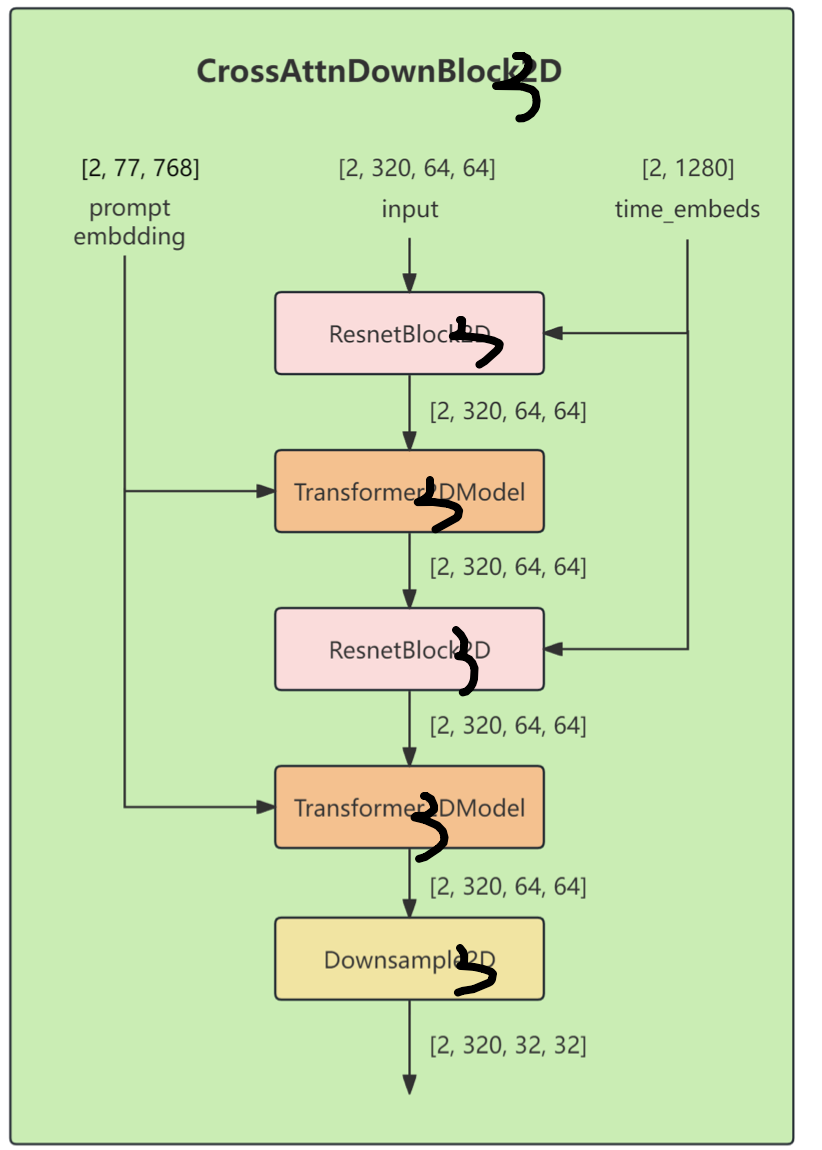
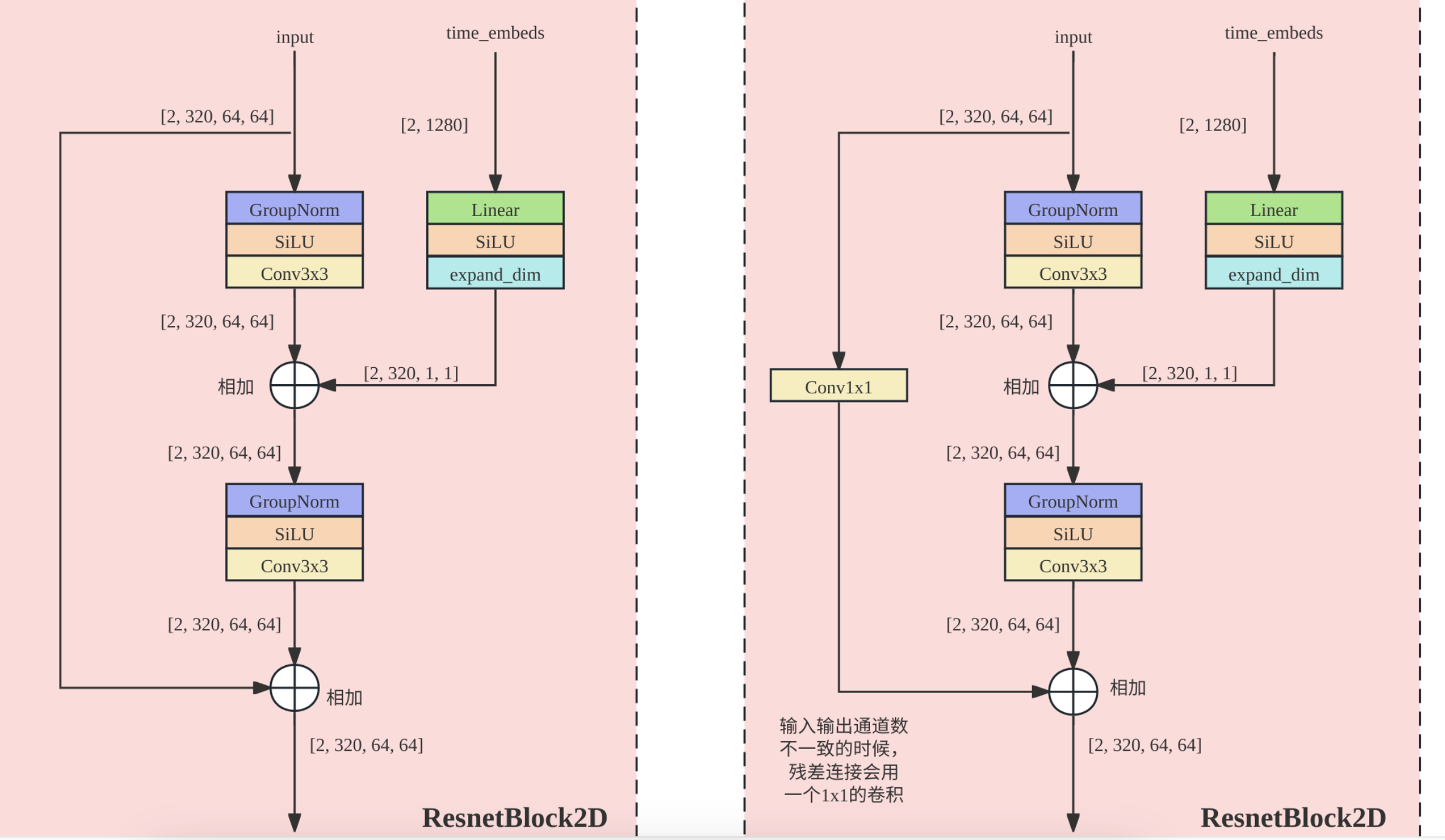
注意:下面图中标注的维度可能不正确,因为它们来自 2D Stable Diffusion 模型。

Conv_in

1
2
3
4
5
6
7
8
self.input_blocks = nn.ModuleList(
[
TimestepEmbedSequential(
# create 2D convolution, conv_in
conv_nd(dims, in_channels, model_channels, 3, padding=1)
)
]
)

Attention / ResBlocks

VideoResBlock / TemporalSpatialResBlock(ResnetBlock3D)

2D spatial resnet

1
2
3
4
5
6
7
8
9
10
11
12
super().__init__(
channels,
emb_channels,
dropout,
out_channels=out_channels,
use_conv=use_conv,
use_scale_shift_norm=use_scale_shift_norm,
dims=dims,
use_checkpoint=use_checkpoint,
up=up,
down=down,
)

3D temporal resnet

1
2
3
4
5
6
7
8
9
10
11
12
13
14
self.time_stack = ResBlock(
default(out_channels, channels),
emb_channels,
dropout=dropout,
dims=3,
out_channels=default(out_channels, channels),
use_scale_shift_norm=False,
use_conv=False,
up=False,
down=False,
kernel_size=video_kernel_size,
use_checkpoint=use_checkpoint,
exchange_temb_dims=True,
)

alpha blender

1
2
3
4
5
self.time_mixer = AlphaBlender(  # mixer
alpha=merge_factor,
merge_strategy=merge_strategy,
rearrange_pattern="b t -> b 1 t 1 1",
)

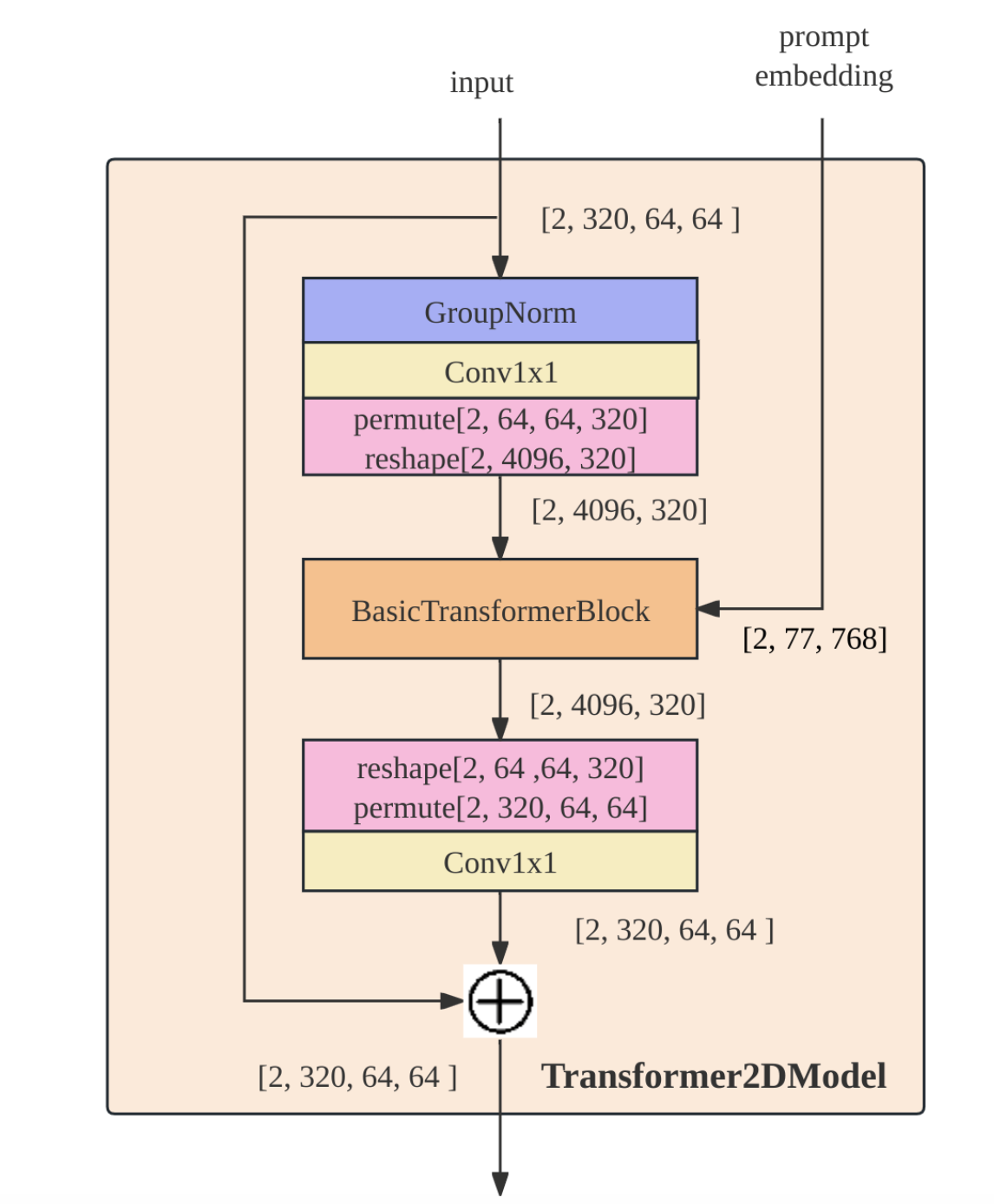
SpatialVideoTransformer(Transformer3DModel)

Original 2D Transformer(SpatialTransformer)

1
2
3
4
5
6
7
8
9
10
11
12
super().__init__(
in_channels,
n_heads,
d_head,
depth=depth,
dropout=dropout,
attn_type=attn_mode,
use_checkpoint=checkpoint,
context_dim=context_dim,
use_linear=use_linear,
disable_self_attn=disable_self_attn,
)

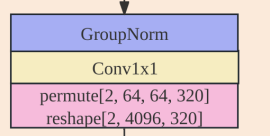
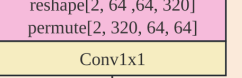
Preprocessing layer

这里用 Linear 替代了卷积:

1
2
3
4
5
6
7
if not use_linear:  # use_linear is True
self.proj_in = nn.Conv2d(
in_channels, inner_dim, kernel_size=1, stride=1, padding=0
)
else:
# 使用 Linear 层代替 Transformer2DModel 中的 Conv1x1
self.proj_in = nn.Linear(in_channels, inner_dim)

BasicTransformer

这里的维度与下面的图不同,因为下图表示的是原始 SD 模型。

注意有一个参数 self.disable_self_attn:如果为 true,第一个 self-attention 层会变成 cross-attention,也就是两个 attention 层都 conditioned on CLIP encoder 的输出。

1
2
3
4
5
6
7
8
9
10
11
12
13
14
15
16
self.transformer_blocks = nn.ModuleList(  # 正式的 BasicTransformerBlock
[
BasicTransformerBlock(
inner_dim,
n_heads,
d_head,
dropout=dropout,
context_dim=context_dim[d],
disable_self_attn=disable_self_attn,
attn_mode=attn_type,
checkpoint=use_checkpoint,
sdp_backend=sdp_backend,
)
for d in range(depth)
]
)

Post-process layer

这里同样用 Linear 替代卷积。

1
2
3
4
5
6
if not use_linear:
self.proj_out = zero_module(
nn.Conv2d(inner_dim, in_channels, kernel_size=1, stride=1, padding=0)
)
else:
self.proj_out = zero_module(nn.Linear(inner_dim, in_channels))

Temporal Transformer(VideoTransformer)

1
2
3
4
5
6
7
8
9
10
11
12
13
14
15
16
17
18
19
self.time_stack = nn.ModuleList(
[
VideoTransformerBlock(
inner_dim,
n_time_mix_heads,
time_mix_d_head,
dropout=dropout,
context_dim=time_context_dim, # 1024
timesteps=timesteps,
checkpoint=checkpoint,
ff_in=ff_in,
inner_dim=time_mix_inner_dim,
attn_mode=attn_mode,
disable_self_attn=disable_self_attn, # False
disable_temporal_crossattention=disable_temporal_crossattention, # False
)
for _ in range(self.depth)
]
)

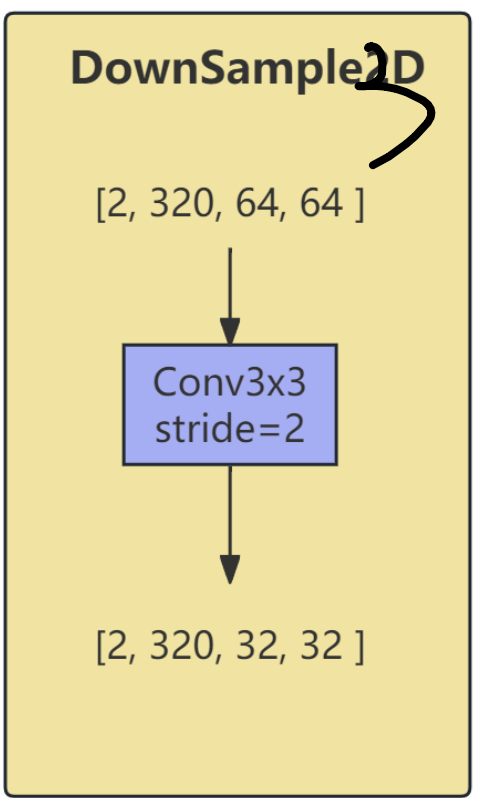
Downsample3D

如果 resblock_updown 为 True,则添加 VideoResBlock / TemporalSpatialResBlock:

1
2
3
4
5
6
7
8
9
10
11
12
13
14
15
16
17
18
19
20
21
22
23
24
25
self.input_blocks.append(
TimestepEmbedSequential(
get_resblock(
merge_factor=merge_factor,
merge_strategy=merge_strategy,
video_kernel_size=video_kernel_size,
ch=ch,
time_embed_dim=time_embed_dim,
dropout=dropout,
out_ch=out_ch,
dims=dims,
use_checkpoint=use_checkpoint,
use_scale_shift_norm=use_scale_shift_norm,
down=True, # downsample
)
if resblock_updown # False
else Downsample( # downsample block
ch,
conv_resample,
dims=dims,
out_channels=out_ch,
third_down=time_downup,
)
)
)

DownsampleBlock 是一个 kernel size = 3 的 2D 卷积网络(图中标注的维度可能不正确):

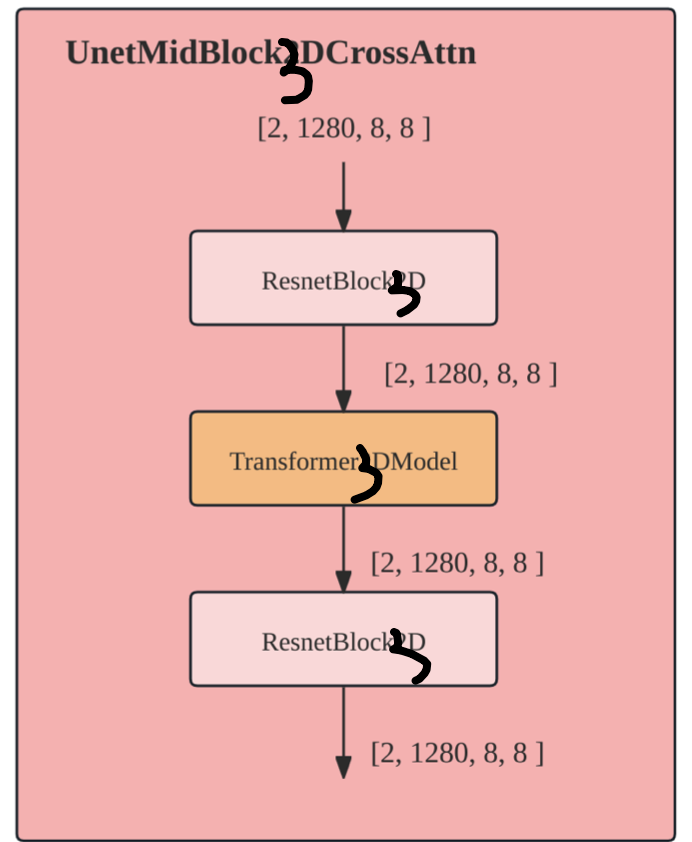
MiddleResBlock

1
2
3
4
5
6
7
8
9
10
11
12
13
14
15
16
17
18
19
20
21
22
23
24
25
26
27
28
29
30
31
32
33
34
self.middle_block = TimestepEmbedSequential(
get_resblock(
merge_factor=merge_factor,
merge_strategy=merge_strategy,
video_kernel_size=video_kernel_size,
ch=ch,
time_embed_dim=time_embed_dim,
out_ch=None,
dropout=dropout,
dims=dims,
use_checkpoint=use_checkpoint,
use_scale_shift_norm=use_scale_shift_norm,
),
get_attention_layer(
ch,
num_heads,
dim_head,
depth=transformer_depth_middle,
context_dim=context_dim,
use_checkpoint=use_checkpoint,
),
get_resblock(
merge_factor=merge_factor,
merge_strategy=merge_strategy,
video_kernel_size=video_kernel_size,
ch=ch,
out_ch=None,
time_embed_dim=time_embed_dim,
dropout=dropout,
dims=dims,
use_checkpoint=use_checkpoint,
use_scale_shift_norm=use_scale_shift_norm,
),
)

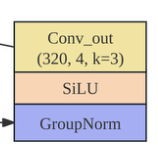
OutBlock

1
2
3
4
5
self.out = nn.Sequential(
normalization(ch),
nn.SiLU(),
zero_module(conv_nd(dims, model_channels, out_channels, 3, padding=1)),
)

Conditioner

CLIP

  • ViT 处理图像
  • Token embedding 处理文本输入

Overall Network Architecture

Training Details

1
2
3
4
5
6
7
8
9
10
11
12
13
14
15
16
17
18
19
20
21
22
23
24
25
26
27
28
29
30
31
32
33
34
35
36
37
38
39
def fit(
self,
model: "pl.LightningModule",
train_dataloaders: Optional[Union[TRAIN_DATALOADERS, LightningDataModule]] = None,
val_dataloaders: Optional[EVAL_DATALOADERS] = None,
datamodule: Optional[LightningDataModule] = None,
train_dataloader=None, # TODO: remove with 1.6
ckpt_path: Optional[str] = None,
) -> None:
r"""
Runs the full optimization routine.

Args:
model: Model to fit.

train_dataloaders: A collection of :class:`torch.utils.data.DataLoader` or a
:class:`~pytorch_lightning.core.datamodule.LightningDataModule` specifying
training samples. In the case of multiple dataloaders, please see this
:ref:`page <multiple-training-dataloaders>`.

val_dataloaders: A :class:`torch.utils.data.DataLoader` or a sequence of them
specifying validation samples.

ckpt_path: Path/URL of the checkpoint from which training is resumed. If there is
no checkpoint file at the path, an exception is raised. If resuming from
mid-epoch checkpoint, training will start from the beginning of the next epoch.

datamodule: An instance of
:class:`~pytorch_lightning.core.datamodule.LightningDataModule`.
"""
if train_dataloader is not None:
rank_zero_deprecation(
"`trainer.fit(train_dataloader)` is deprecated in v1.4 and will be removed in v1.6."
" Use `trainer.fit(train_dataloaders)` instead. HINT: added 's'"
)
train_dataloaders = train_dataloader
self._call_and_handle_interrupt(
self._fit_impl, model, train_dataloaders, val_dataloaders, datamodule, ckpt_path
)

Step 1:读取数据

1
2
3
4
5
6
7
8
9
10
11
12
13
def train_dataloader(self):  # training dataset dataloader
sampler = DistributedSampler(self.train_dataset, seed=self.seed)
return wds.WebLoader(self.train_dataset, batch_size=self.batch_size,
num_workers=self.num_workers, shuffle=False, sampler=sampler)

def val_dataloader(self):
loader = wds.WebLoader(self.val_dataset, batch_size=self.batch_size,
num_workers=self.num_workers, shuffle=False)
return loader

def test_dataloader(self): # test dataset is the same as the evaluation dataset
return wds.WebLoader(self.val_dataset, batch_size=self.batch_size,
num_workers=self.num_workers, shuffle=False)

Step 2:配置 optimizer

1
2
3
4
5
6
7
8
9
10
11
12
13
14
15
16
17
18
19
20
21
22
23
24
25
26
27
28
29
30
31
32
33
34
35
def configure_optimizers(self):
lr = self.learning_rate
if 'all' in self.trained_param_keys:
params = list(self.model.parameters()) # all model parameters
else:
names = []
params = []
for name, param in self.model.named_parameters():
flag = False
for k in self.trained_param_keys:
if k in name:
names += [name]
params += [param]
flag = True
if flag:
break
print(names)

for embedder in self.conditioner.embedders: # all conditioners are not trainable
if embedder.is_trainable:
params = params + list(embedder.parameters())

opt = self.instantiate_optimizer_from_config(params, lr, self.optimizer_config)
if self.scheduler_config is not None:
scheduler = instantiate_from_config(self.scheduler_config)
print("Setting up LambdaLR scheduler...")
scheduler = [
{
"scheduler": LambdaLR(opt, lr_lambda=scheduler.schedule),
"interval": "step",
"frequency": 1,
}
]
return [opt], scheduler
return opt

Step 3:两个关键 condition

  • cond_aug:加到每一帧上的噪声量,用于 cascade LDM 生成高分辨率结果。
  • motion bucket ID:数值越大,生成视频中的运动越多。

First stage encoding(VAE encode)

1
x = self.encode_first_stage(frames_reshape)  # get latent representation, (b t) c h w

Shape:\((B\times N) \times C_{vae} \times H \times W\)

添加 custom condition

1
2
3
4
5
6
7
8
9
10
11
12
13
14
15
16
17
18
19
20
def add_custom_cond(self, batch, infer=False):
batch['num_video_frames'] = self.num_samples # 16

image = batch['video'][:, :, 0] # 取第一帧图像作为 condition
batch['cond_frames_without_noise'] = image.half() # 转成 float16

N = batch['video'].shape[0] # B x C x N_frames x H x W,这里 N 即 batch size
if not infer: # 训练时,cond_aug 是随机的
cond_aug = ((-3.0) + (0.5) * torch.randn((N,))).exp().cuda().half()
else: # 推理时,cond_aug 固定
cond_aug = torch.full((N, ), 0.02).cuda().half()
batch['cond_aug'] = cond_aug
batch['cond_frames'] = (
image + rearrange(cond_aug, 'b -> b 1 1 1') * torch.randn_like(image)
).half()

# for dataset without indicator
if not 'image_only_indicator' in batch:
batch['image_only_indicator'] = torch.zeros((N, self.num_samples)).cuda().half()
return batch

CLIP 编码第一帧作为 condition

1
2
3
4
5
6
def forward(self, vid):
# 这里 vid 代表 batch['cond_frames_without_noise'],即第一帧图像
vid = self.open_clip(vid)
vid = rearrange(vid, "(b t) d -> b t d", t=self.n_cond_frames)
vid = repeat(vid, "b t d -> (b s) t d", s=self.n_copies)
return vid
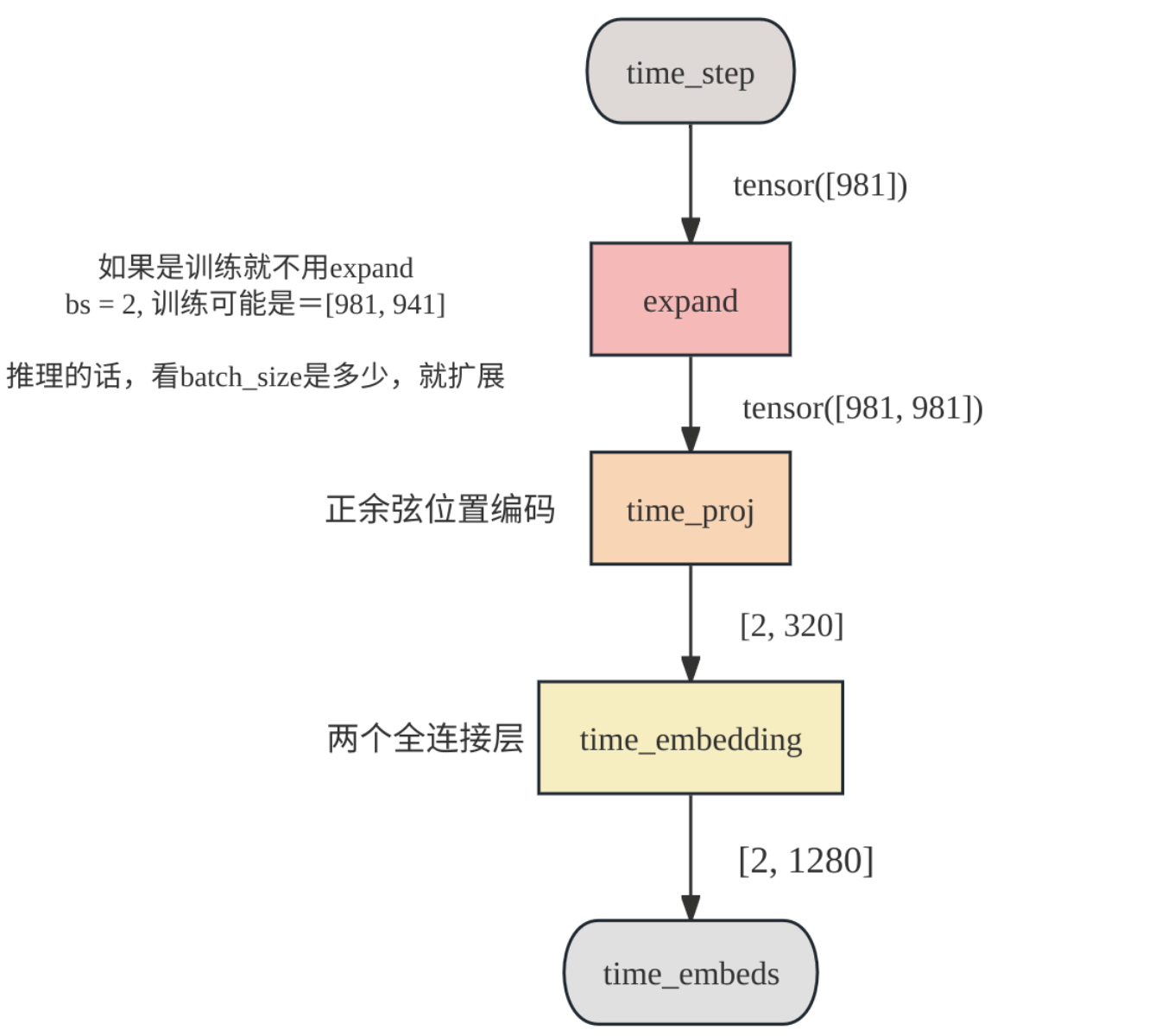
Shape:\(1\times 1024 \rightarrow 1 \times 1 \times 1024 \rightarrow 1 \times 1 \times 1024\)

Aesthetic score

1
2
3
4
5
6
7
8
9
10
11
12
13
14
15
16
17
18
19
def forward(self, x):
B, C, T, H, W = x.shape

y = x[:, :, T//2]
y = torch.nn.functional.interpolate(y, [224, 384], mode='bilinear')
y = y[:, :, :, 80:304]
y = (y + 1) * 0.5
y[:, 0] = (y[:, 0] - 0.48145466) / 0.26862954
y[:, 1] = (y[:, 1] - 0.4578275) / 0.26130258
y[:, 2] = (y[:, 2] - 0.40821073) / 0.27577711

image_features = self.aesthetic_model.encode_image(y) # CLIP image encoder, 1 x 768
im_emb_arr = normalized(image_features.cpu().detach().numpy()) # 1 x 768
aesthetic = self.aesthetic_mlp(
torch.from_numpy(im_emb_arr).to('cuda').type(torch.cuda.FloatTensor)
) # 1 x 1

# [aesthetic_score, time_step]
return torch.cat([aesthetic, timestep_embedding(aesthetic[:, 0] * 100, 255)], 1)

Shape:\(1 \times 256\)

Elevation

elevation(仰角)走的是 ConcatTimestepEmbedderND——它把输入的每一个维度独立做 timestep embedding,然后拼接起来:

1
2
3
4
5
6
7
8
9
10
11
12
13
14
15
16
17
18
class ConcatTimestepEmbedderND(AbstractEmbModel):
"""embeds each dimension independently and concatenates them"""

def __init__(self, outdim):
super().__init__()
self.timestep = Timestep(outdim)
self.outdim = outdim

def forward(self, x):
if x.ndim == 1:
x = x[:, None] # 标量 → (b, 1)
assert len(x.shape) == 2
b, dims = x.shape[0], x.shape[1]
x = rearrange(x, "b d -> (b d)") # 摊平,让所有标量一次过 Timestep
emb = self.timestep(x) # (b*d, outdim),正弦位置编码
emb = rearrange(emb, "(b d) d2 -> b (d d2)",
b=b, d=dims, d2=self.outdim)
return emb

逻辑是:把 2D 输入的每一列都当作一个独立标量去编码。先把 batch 和维度一起摊平,让 Timestep 一次处理完所有标量,再拆回来,把各维度的 embedding(每个长度 outdim)沿特征轴拼接,最终输出形状为 \(b \times (\text{dims} \cdot \text{outdim})\)

对 elevation 而言 dims = 1,所以输出就是 \(b \times \text{outdim}\)。同一个类也被 cond_augfps_idmotion_bucket_id 等标量 condition 复用——这就是为什么 SVD 里所有标量条件都能走同一套 embedder。

代码取自 Stability-AI generative-modelssgm/modules/encoders/modules.py